A comprehensive overview of legal, educational, cultural, economic, religious, political, urban, youth, monitoring, and technological measures.
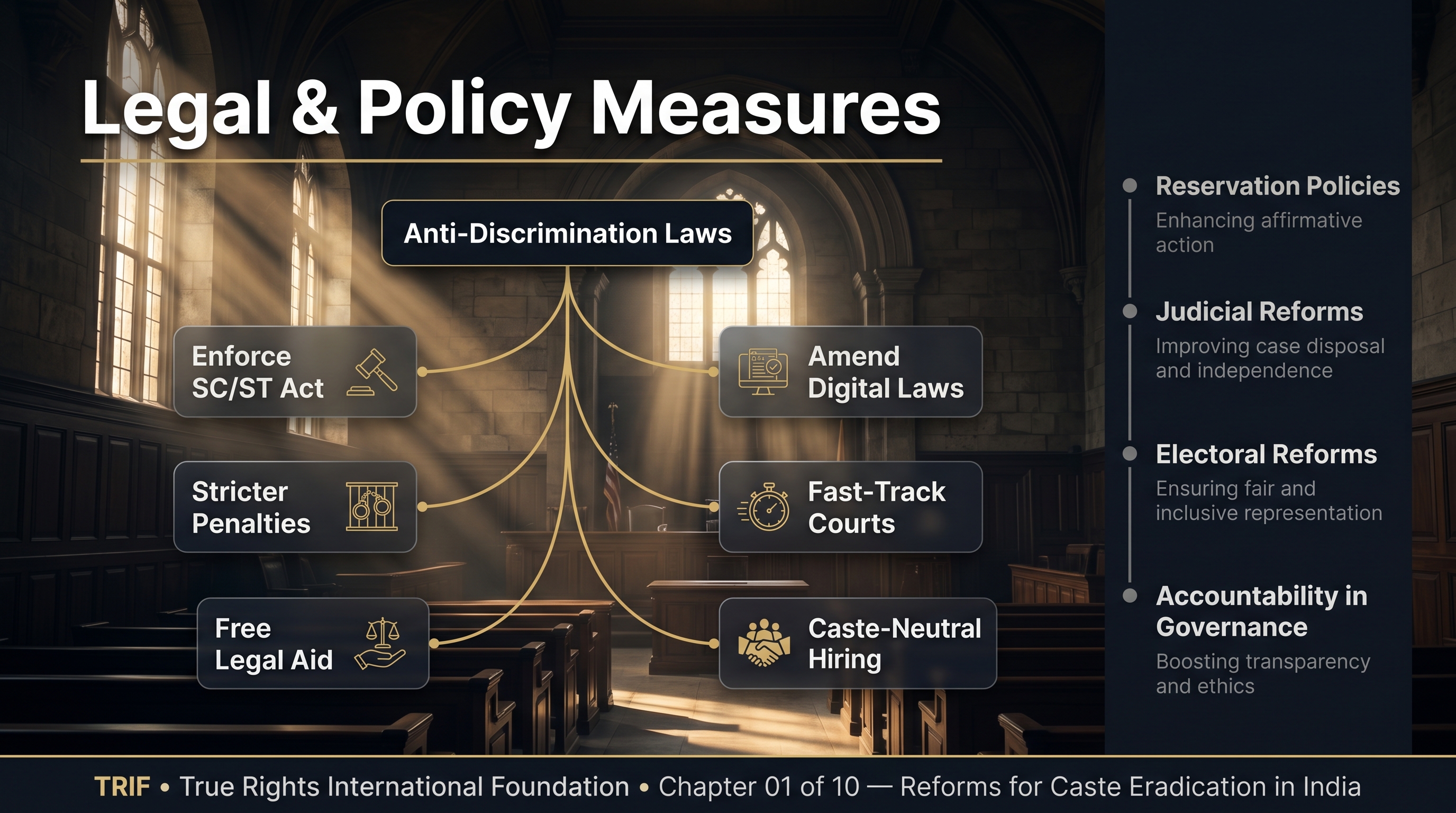
Enforce Existing Laws: Strengthen the implementation of laws like the Scheduled Castes and Tribes (Prevention of Atrocities) Act, ensuring that cases of caste-based violence and discrimination are handled swiftly and justly.
Amend and Update Laws: Introduce amendments to make anti-discrimination laws more comprehensive, covering newer forms of caste-based discrimination such as cyberbullying, workplace harassment, etc.
Stricter Penalties: Impose harsher penalties for individuals and institutions practicing or enabling caste-based discrimination to deter violations.
Continue Quotas: Maintain reservations for Scheduled Castes (SC), Scheduled Tribes (ST), and Other Backward Classes (OBC) in education, government jobs, and political representation.
Gradual Reduction: As equality improves, gradually reduce reliance on quotas but ensure they are not prematurely removed until true equality is achieved.
Private Sector Participation: Encourage private sector companies to implement voluntary reservation policies for marginalized communities.

Incentivize Caste-Neutral Hiring: Offer tax benefits or other incentives for companies that adopt caste-neutral hiring practices and prioritize diversity in recruitment.
Caste-Anonymous Applications: Encourage companies to adopt caste-anonymous hiring processes, where the caste identity of candidates is not disclosed during hiring.
Fast-Track Courts: Establish fast-track courts specifically for handling cases related to caste-based atrocities and discrimination, ensuring timely justice.
Legal Aid for Marginalized Communities: Provide free legal services and awareness programs for marginalized communities to help them understand their rights and access justice.

Curb Caste-Based Politics: Implement electoral reforms to discourage political parties from using caste-based appeals to garner votes. Political candidates should focus on developmental and progressive agendas rather than caste divisions.
Stringent Monitoring of Hate Speech: Enforce strict penalties for political leaders or candidates who engage in caste-based hate speech or perpetuate caste divisions during campaigns.
Government Oversight: Hold government officials accountable for ensuring that anti-caste discrimination laws are enforced in their jurisdictions. Regular audits should be conducted to track compliance.
Penalize Caste-Based Bias: Impose penalties on civil servants or law enforcement officers who engage in or tolerate caste-based bias in the implementation of policies.
Empower Local Bodies: Strengthen Panchayati Raj institutions and urban local bodies to actively address caste-based issues in their regions.
Caste-Neutral Policies: Ensure that local governance promotes caste-neutral policies in areas like housing, land distribution, and welfare programs.
Inclusive Public Services: Ensure that public services, including healthcare, education, and welfare programs, are administered without caste-based discrimination.
Caste Sensitivity Training: Introduce caste-sensitivity training for public servants, law enforcement officers, and educators to ensure they understand and recognize caste-based discrimination and work to eliminate it.
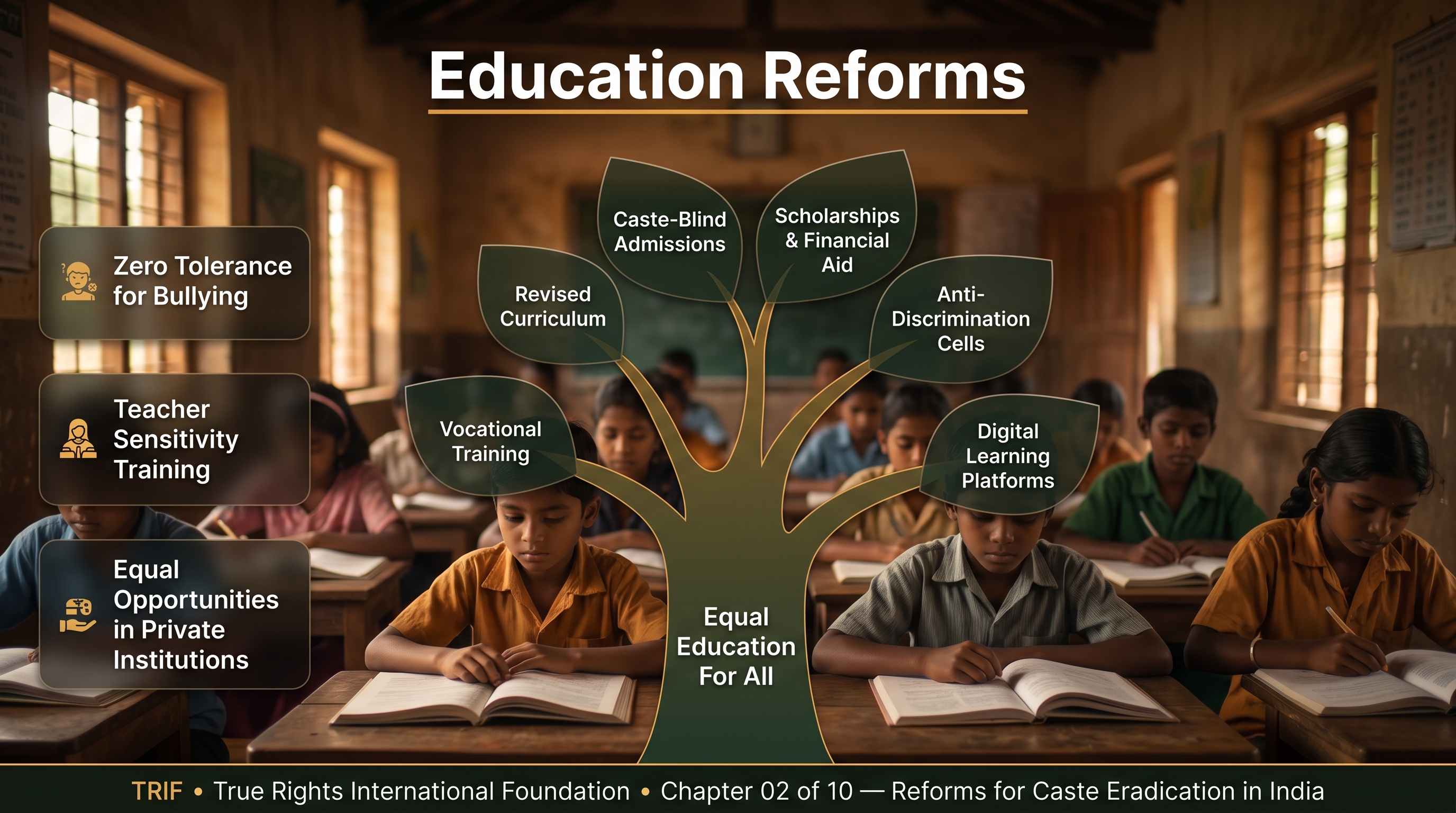
Incorporating Social Equality in Education: Revise school curricula to include lessons on caste equality, human rights, and social justice from primary to higher education.
Emphasize Pluralism and Secularism: Teach the values of diversity, pluralism, and the importance of equality across all caste and religious lines, emphasizing India's constitution and principles of secularism.
Caste-Blind Admissions: Promote a caste-blind admissions process in schools and universities to ensure students from all backgrounds receive equal opportunities without discrimination.
Promote Interaction Between Students: Schools should encourage collaborative projects, team-building activities, and social interaction between students from different castes to foster unity and mutual respect.
Zero-Tolerance for Caste-Based Bullying: Implement strict policies to prevent and address caste-based bullying, harassment, or discrimination among students, teachers, and staff.
Expand Scholarships for Marginalized Groups: Provide more scholarships and financial aid for students from marginalized communities (SC, ST, OBC, etc.), ensuring they have access to higher education and vocational training without financial barriers.
Free or Subsidized Education: Offer free or heavily subsidized education to students from lower-caste backgrounds, especially in rural areas where educational opportunities are limited.
Improving School Infrastructure: Ensure that schools in rural and underdeveloped areas where marginalized communities live have access to quality teachers, resources, and facilities.
Teacher Training for Inclusivity: Train teachers to be sensitive to caste-related issues, promoting inclusive teaching methods and ensuring they do not engage in or tolerate caste-based discrimination in the classroom.
Create Anti-Discrimination Cells: Establish anti-discrimination cells in schools, colleges, and universities to address caste-based grievances and ensure that students from marginalized communities have access to resources, support, and redressal mechanisms.
Monitoring and Accountability: Ensure that these cells regularly monitor instances of discrimination and harassment, and take swift action to address complaints.
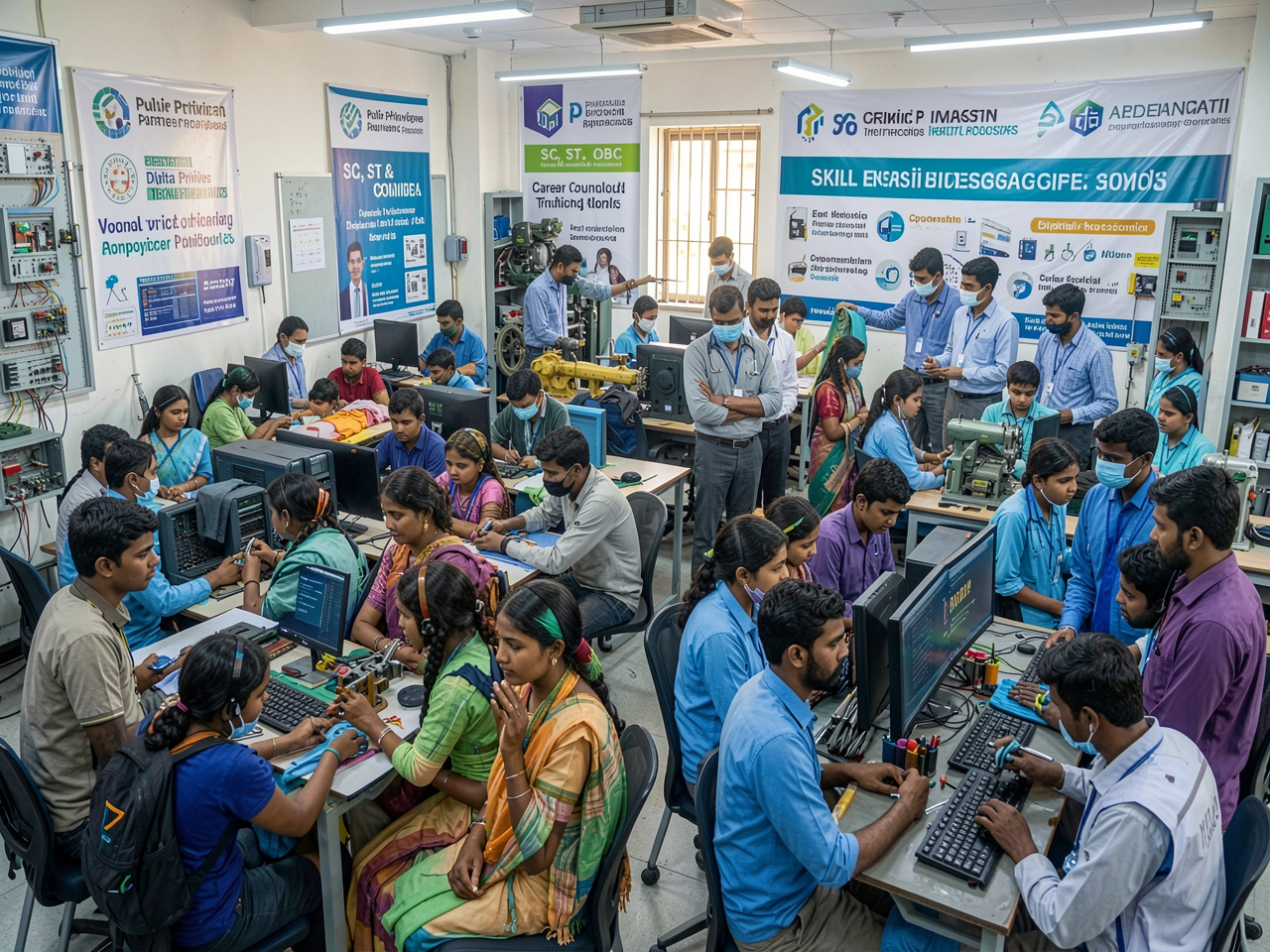
Skill Development Programs: Offer skill development programs and vocational training to students from lower-caste communities, providing them with the skills needed to secure employment and improve their economic status.
Job-Oriented Education: Encourage educational institutions to introduce job-oriented courses that can help marginalized students gain practical skills for employment.

Affirmative Action in Admissions: Continue affirmative action policies in educational institutions to ensure that students from SC, ST, and OBC have adequate representation in colleges and universities.
Equal Opportunities in Private Institutions: Encourage private educational institutions to adopt similar affirmative action policies to promote equal access to education.
Educating Parents: Implement community outreach programs to educate parents, especially in rural areas, about the importance of caste equality and the long-term benefits of education for all children.
Social Awareness Campaigns: Use educational institutions as platforms to promote social awareness campaigns against caste discrimination, encouraging students to become advocates of equality.
Promote Online Learning Platforms: Introduce digital learning platforms and provide access to marginalized students in rural and remote areas. This ensures education is accessible to everyone, regardless of geographical or caste barriers.
Free Access to Educational Resources: Provide free access to online educational content, including tutorials, lectures, and study materials, for students from marginalized communities.
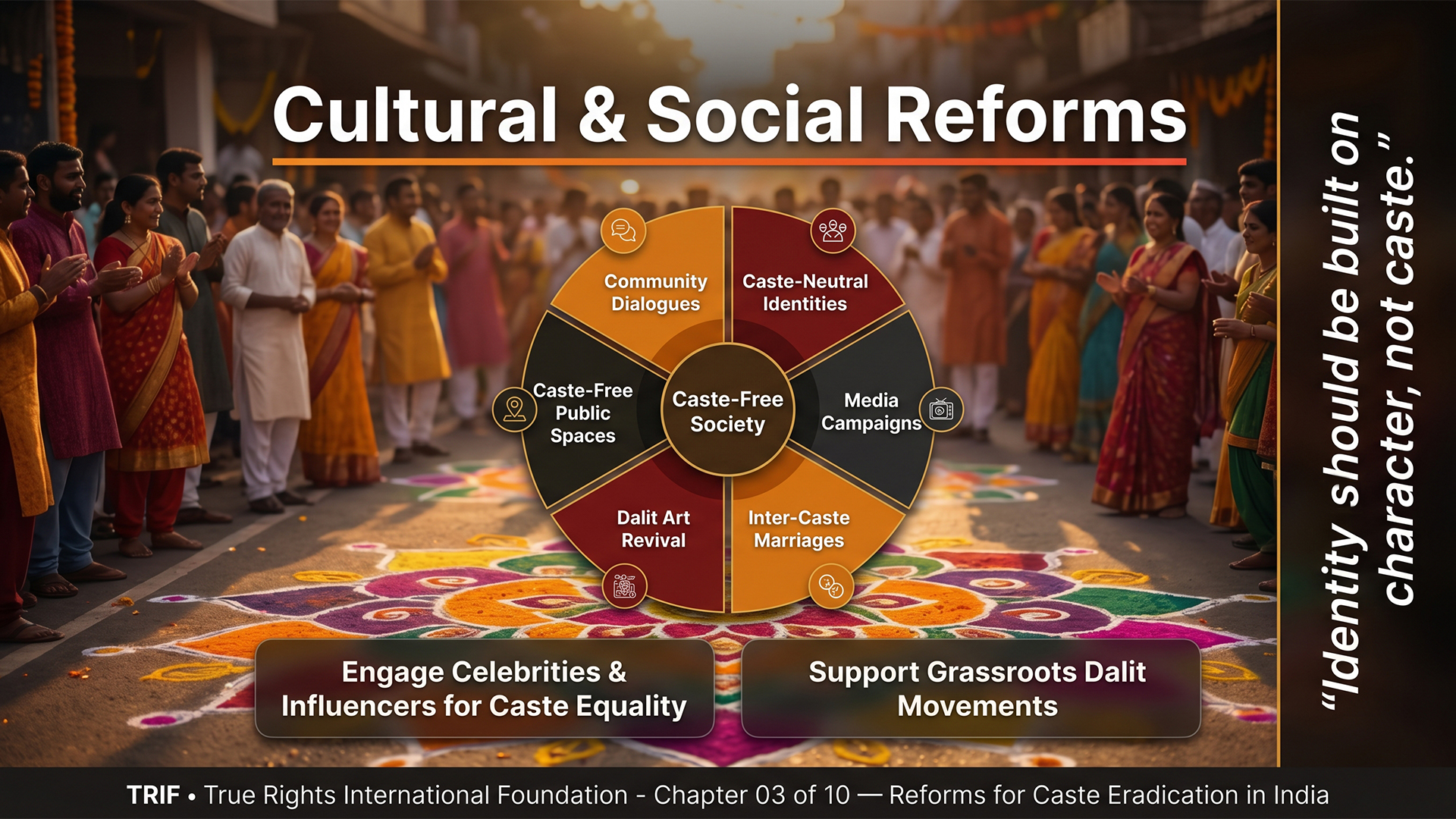
Dialogue and Workshops: Organize regular community dialogues and workshops across urban and rural areas to educate people on the harmful effects of caste discrimination.
Village and Urban Committees for Caste Harmony: Set up local committees in villages and towns focused on caste harmony, tasked with resolving disputes, preventing discrimination, and fostering social unity.
Promote Caste-Neutral Identities: Encourage individuals to drop caste-based surnames and adopt caste-neutral or single surnames, shifting the focus from caste to merit and character.
Encouraging Professional and National Identities: Promote the idea that one's identity should be based on profession, nationality, and character rather than caste.
Challenge Caste Stereotypes in Media: Use television, films, and social media to portray positive and diverse stories of individuals from marginalized castes breaking barriers.
Popularize Caste Equality in Art and Literature: Encourage writers, filmmakers, artists, and musicians to create works that challenge caste hierarchies and celebrate inter-caste unity.

Incentivizing Inter-Caste Marriages: Provide financial and social incentives for inter-caste marriages, reducing the stigma around them. Government and NGOs should promote inter-caste marriages as symbols of equality and unity.
Public Campaigns on Successful Inter-Caste Marriages: Highlight successful inter-caste marriages in the media, showing that such unions foster stronger social cohesion and equality.
Highlight Success Stories: Celebrate individuals from marginalized communities who have achieved success in various fields — business, arts, politics, and sports — to counter caste-based discrimination and inspire others.
Involvement of Celebrities and Public Figures: Engage public figures, celebrities, and influencers to actively promote caste equality.
Eradicate Caste Segregation: Ensure that public spaces like community centers, markets, parks, and water sources are free from any form of caste segregation.
Mixed-Caste Neighborhoods: Encourage mixed-caste living in urban and rural areas, reducing physical segregation based on caste.
Mobilize Youth for Caste Equality: Encourage youth movements and organizations to take up the cause of caste eradication.
Support for Dalit Movements: Provide greater support to grassroots Dalit and marginalized caste movements that have long been advocating for equal rights.
Promote Caste-Neutral Social Practices: Encourage caste-free rituals in weddings, funerals, and other social ceremonies.
Reviving Caste-Free Festivals: Reintroduce or promote festivals and social events that encourage equal participation from all castes, fostering unity and reducing segregation.
Immediate Response to Caste-Based Violence: Strengthen community and law enforcement responses to caste-based violence, ensuring timely justice and protection for victims.
Support for Victims: Establish support centers for victims of caste-based violence or discrimination, providing them with legal, psychological, and financial assistance.
Promote Indigenous and Dalit Culture: Revive and promote indigenous and Dalit art forms, traditions, and languages that have been historically marginalized due to caste discrimination.
Government Sponsorship for Marginalized Arts: The government can sponsor cultural festivals and programs that celebrate the art, history, and contributions of marginalized communities.
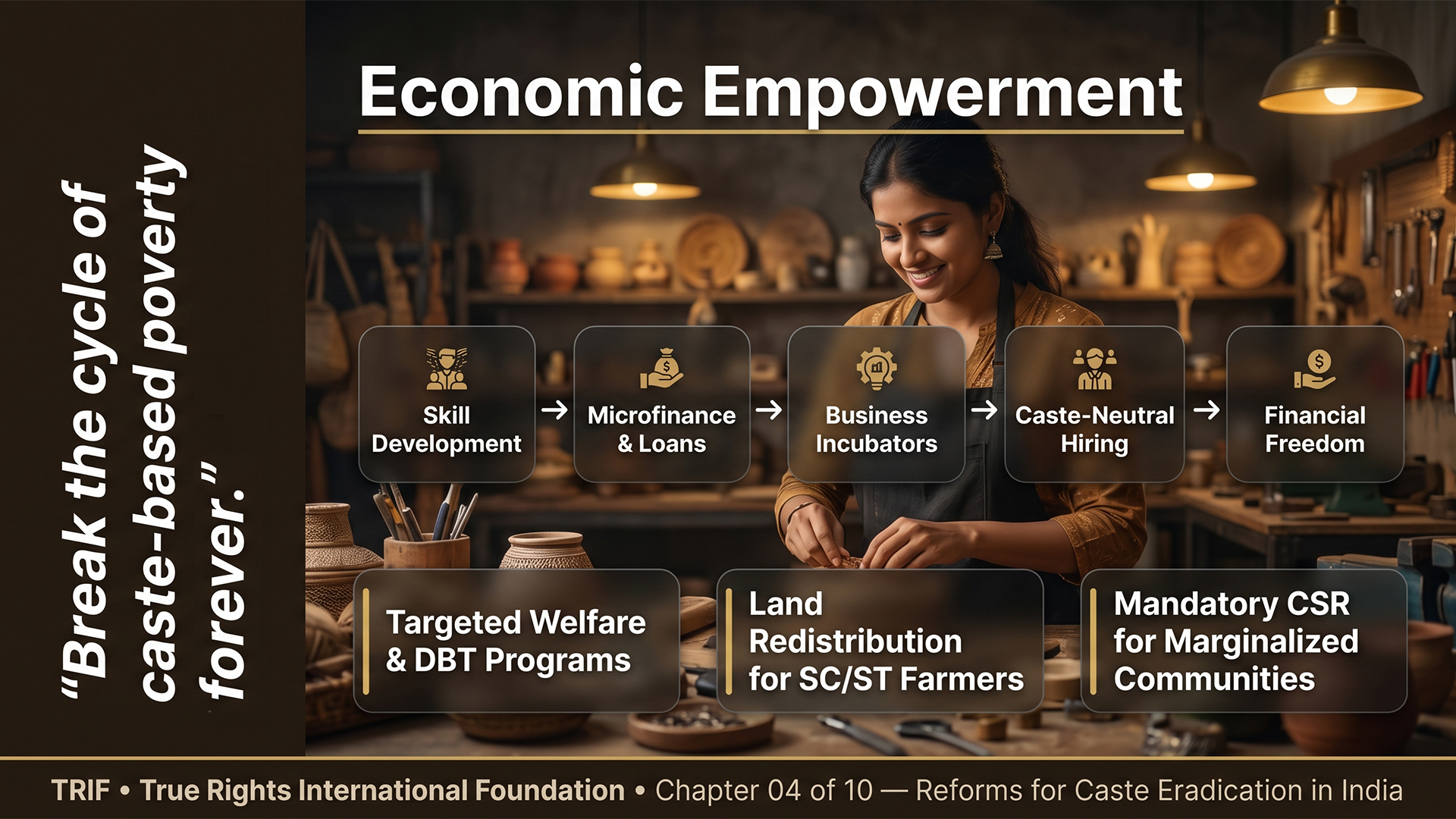
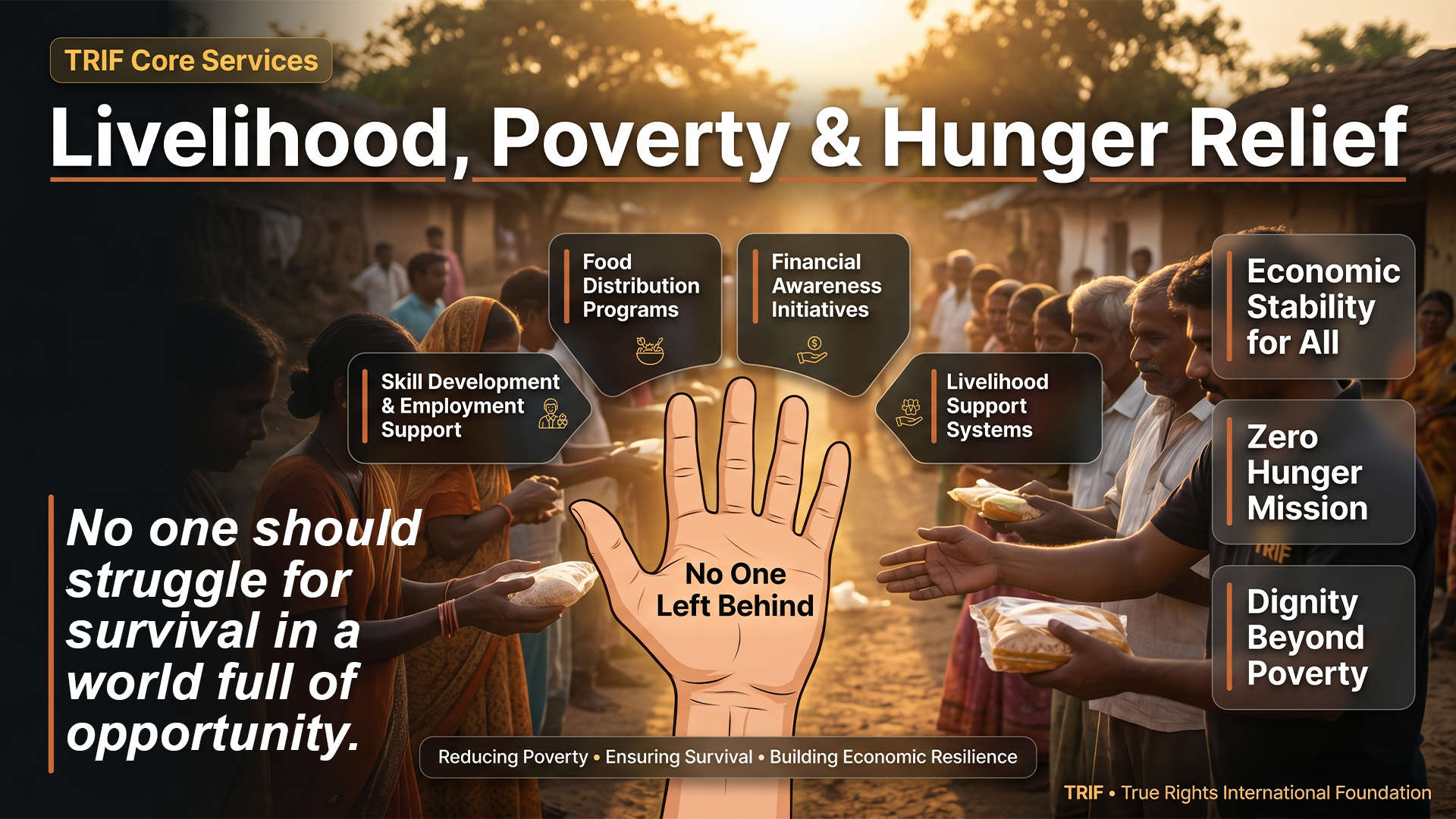
Vocational Training for Marginalized Groups: Implement large-scale skill development and vocational training programs specifically targeting SC, ST, and OBCs to help individuals acquire market-relevant skills.
Apprenticeship and Mentorship Programs: Encourage public-private partnerships to provide apprenticeship and mentorship opportunities for marginalized communities.

Microfinance and Loan Schemes: Introduce microloans and low-interest financial assistance programs for entrepreneurs from marginalized communities.
Business Incubators: Set up business incubators and startup hubs offering guidance, resources, and financial support for entrepreneurs from historically disadvantaged communities.
Government Procurement Support: Ensure that government procurement policies include a fixed percentage of contracts awarded to businesses owned by marginalized groups.
Extend Reservations to Private Sector: Encourage private companies to adopt voluntary job reservations for SC, ST, and OBC candidates through tax breaks, subsidies, or public recognition.
Caste-Neutral Employment Practices: Introduce legal frameworks or CSR guidelines requiring private companies to adopt caste-neutral recruitment, promotion, and wage practices.
Free and Subsidized Higher Education: Ensure that students from marginalized castes receive free or heavily subsidized higher education, including scholarships for technical and professional courses.
Special Focus on Digital Literacy: Create digital literacy programs providing marginalized communities with skills to thrive in the digital economy.
Support for Marginalized Farmers: Implement targeted policies providing agricultural subsidies, land rights, and access to modern farming technologies for farmers from SC, ST, and OBC communities.
Land Redistribution: Strengthen land reform initiatives to redistribute agricultural land to marginalized communities, reducing their dependence on upper-caste landlords.
Caste-Neutral Banking Access: Establish specialized banking services and financial products catering to marginalized groups, offering easier access to savings accounts, loans, and credit facilities.
Financial Literacy Programs: Promote financial literacy campaigns targeted at marginalized communities to help them understand banking, investment, and financial planning.
Targeted Social Welfare Programs: Expand and strengthen social welfare programs such as pensions, housing schemes, health insurance, and food security for marginalized communities.
Direct Cash Transfers: Implement Direct Benefit Transfer (DBT) programs that provide financial assistance directly to the bank accounts of marginalized families.
Mandatory CSR Contributions: Encourage or mandate companies to allocate a portion of their CSR funds towards initiatives that support economic empowerment of marginalized communities.
Incentivize Companies for Inclusive Growth: Provide companies with tax benefits, awards, or recognition for adopting inclusive policies that promote the economic upliftment of SC/ST/OBC communities.
Preservation and Promotion: For communities historically associated with crafts or trades (pottery, weaving, artisanal work), provide government support to modernize these industries.
Expanding Market Access: Create platforms (online and offline) where artisans and workers from marginalized communities can sell their products without exploitation.
Affordable Housing: Expand housing schemes providing affordable housing options in urban areas for SC/ST/OBC families. Mixed-caste neighborhoods can promote social integration.
Access to Urban Employment: Create affordable transport and housing solutions to enable people from marginalized rural communities to seek employment opportunities in cities.
Progressive Taxation Policies: Implement progressive taxation policies that channel funds towards marginalized communities for welfare programs, skill development, and education.
Wealth Redistribution Schemes: Encourage policies that promote fair land distribution, inheritance, and transfer of wealth to historically disadvantaged communities.
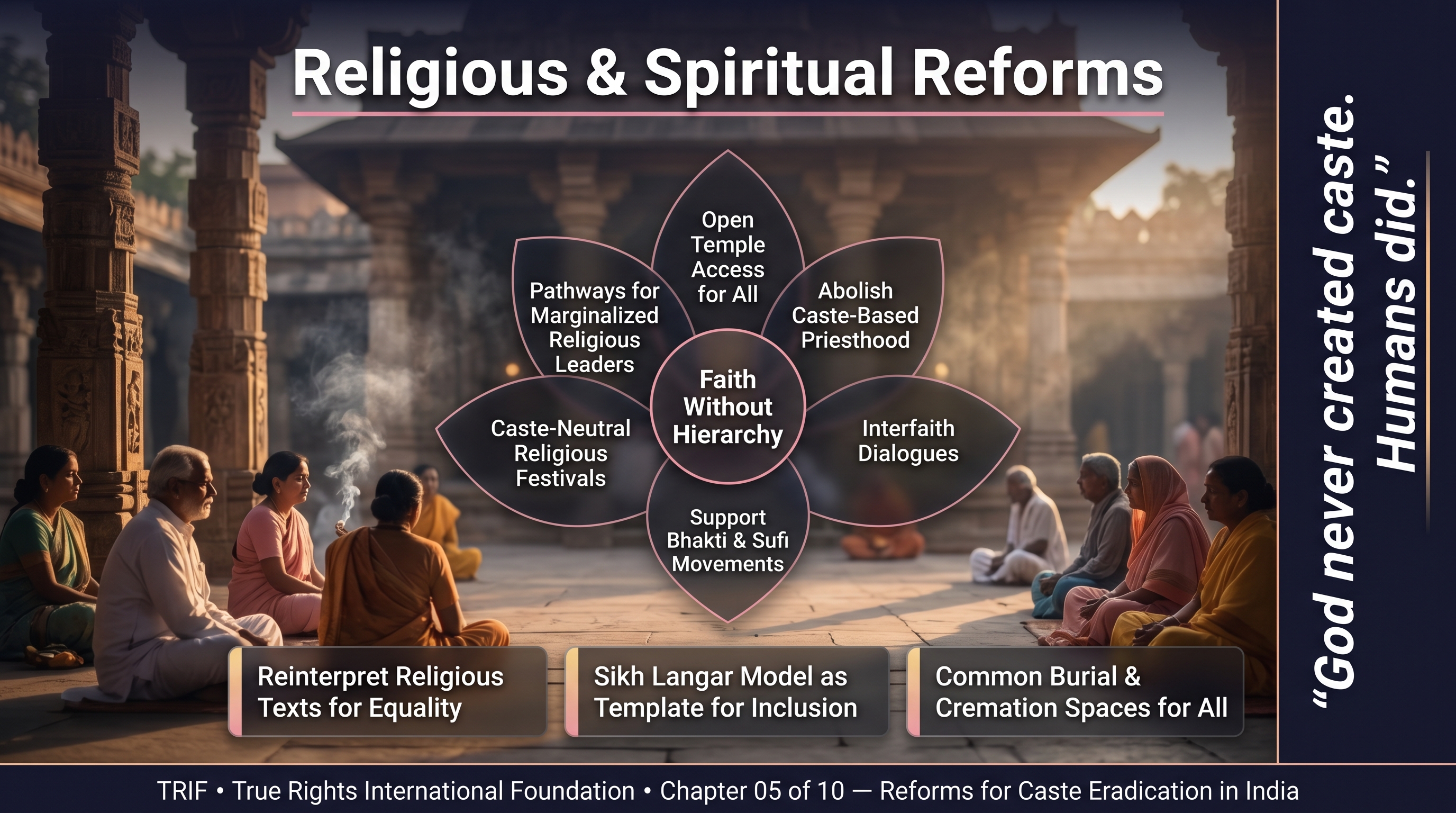
Open Temple Access for All Castes: Promote initiatives that ensure people from all castes have equal access to religious spaces. Religious institutions should actively dismantle barriers that prevent marginalized communities from participating in religious rituals and events.
Reinterpretation of Religious Texts: Encourage religious scholars and leaders to reinterpret ancient religious texts in ways that emphasize equality and social justice, rather than supporting caste hierarchies.
Eliminate Caste-Based Religious Roles: Abolish the practice of assigning priesthood or other religious roles based on caste. Individuals from all castes should be allowed to take on religious leadership roles based on merit and knowledge.
Non-Discriminatory Religious Events: Organize religious and spiritual events that actively discourage caste distinctions, open to all regardless of caste.
Promoting Secular Values: Religious gatherings and festivals should focus on universal values such as compassion, equality, and unity.
Temple and Religious Institution Reforms: Encourage temples, mosques, churches, and other religious institutions to adopt reforms that reflect India's constitutional values of equality and secularism.
Dialogue Among Religious Leaders: Facilitate interfaith and intra-religion dialogues focusing on eradicating caste discrimination. Religious leaders can play a key role in fostering discussions around caste equality.
Promoting Unity in Diversity: Religious groups should focus on messages of unity and shared humanity present in most faith traditions.

Support Reformist Religious Movements: Revive and support reformist movements such as the Bhakti movement in Hinduism and the Sufi movement in Islam that historically challenged caste divisions.
Highlighting Egalitarian Saints and Leaders: Emphasize teachings of saints like Guru Ravidas, Basava, and Dr. B.R. Ambedkar, who advocated for caste-free societies.
Caste-Neutral Religious Festivals: Promote religious festivals and spiritual gatherings that encourage participation of all castes equally. The Sikh langar (community kitchen) model provides an excellent example of equal participation.
Incentives for Inclusive Spiritual Practices: Provide financial and social incentives to places of worship that demonstrate inclusion of all castes in their rituals and leadership roles.
Encouraging Marginalized Caste Leaders in Religion: Create pathways for individuals from marginalized castes to become religious leaders, priests, and teachers.
Establishing Caste-Neutral Seminaries: Encourage the establishment of caste-neutral seminaries and religious schools where students from all castes can receive religious education and training.
Common Burial and Cremation Spaces: Ensure that burial and cremation grounds are open to people of all castes. Religious institutions should lead the way in promoting equal access to these sacred spaces.
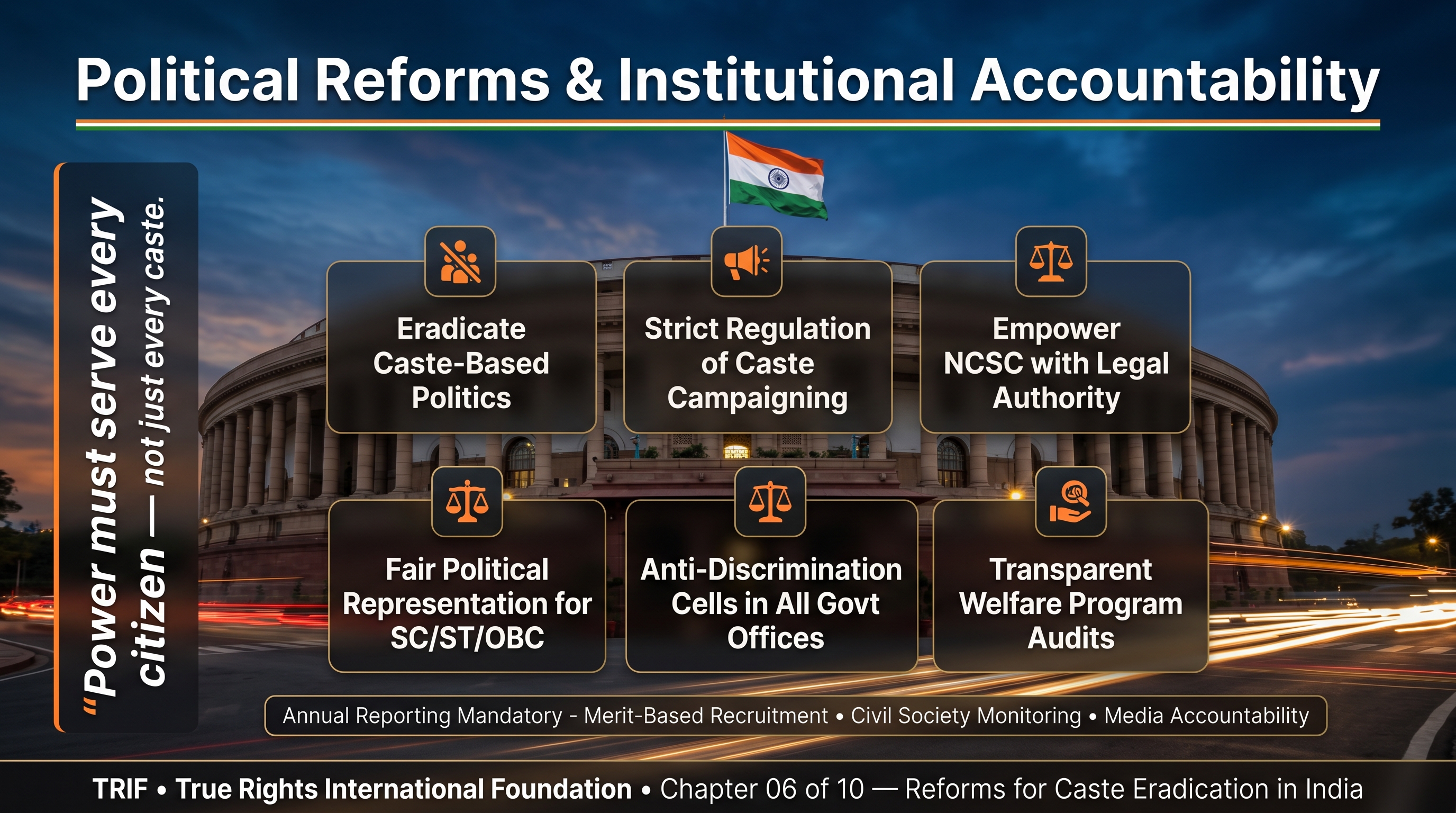
Electoral Reforms: Implement electoral reforms to discourage political parties from using caste as a tool for vote bank politics. Political platforms should focus on development, social justice, and economic growth.
Strict Regulation of Caste-Based Campaigning: Enforce strict regulations preventing politicians and political parties from exploiting caste identities during elections. Any promotion of caste hatred should result in legal consequences and disqualification.
Incentivizing Development-Focused Politics: Encourage political parties to adopt development-focused agendas by providing incentives for parties that demonstrate policies aimed at social and economic inclusion.
Penalties for Discrimination by Public Officials: Implement strict penalties for public officials who engage in or tolerate caste-based discrimination, with clear mechanisms to report and investigate misconduct.
Strengthening the Role of NCSC: Empower the National Commission for Scheduled Castes to play a more active role in investigating caste-based discrimination, with legally enforceable recommendations.
Annual Reporting: Mandate all public institutions to report annually on caste-based incidents within their organizations, including steps taken to address them.
Promoting Political Representation for Marginalized Castes: Ensure fair political representation of SC, ST, and OBC in local, state, and national governments.
Reserved Seats in Local Governance: Continue the reservation of seats in Panchayati Raj institutions and urban local bodies for SC/ST/OBC members.
Support for Leadership Development: Provide leadership training and capacity-building programs for individuals from marginalized castes to encourage more participation in politics and governance.
Establish Anti-Discrimination Cells: Create anti-discrimination cells in all government offices and institutions to address caste-based grievances.
Merit-Based Recruitment: Ensure that recruitment processes in government institutions are transparent and merit-based, with strict monitoring to prevent caste-based biases.
Caste-Neutral Public Services: Public services such as health, education, and social welfare programs should be entirely caste-neutral in their delivery.
Transparency in Welfare Programs: Ensure transparency in the implementation of welfare programs meant for SC/ST/OBC communities. Independent bodies should regularly audit these programs.
Penalties for Corruption: Impose severe penalties on government officials or institutions involved in corrupt practices related to caste-based reservations, subsidies, or affirmative action programs.
Media Campaigns to Address Caste Discrimination: Encourage media outlets to run campaigns that address caste-based discrimination and promote equality.
Civil Society Monitoring: Strengthen the role of civil society organizations in monitoring caste-based discrimination and human rights violations. NGOs and human rights groups can serve as watchdogs.
Dilution of Caste Identities in Urban Areas: Urbanization naturally weakens rigid caste-based identities due to the mixed social environments and diverse economic opportunities present in cities.
Encouraging Migration to Cities: Policies that promote migration from rural to urban areas can help marginalized groups escape the rigid caste hierarchies prevalent in villages.
Development of New Urban Centers: Developing smaller towns and cities into major urban centers with better infrastructure can encourage marginalized communities to migrate and integrate, reducing caste-based segregation.
Mixed Housing Schemes: Promote affordable housing policies that encourage mixed-caste residential areas, reducing caste-based segregation.
Government-Sponsored Housing: Develop affordable housing projects specifically for SC, ST, and OBC in urban areas.
Urban Slum Development: Address caste-based segregation in urban slums by improving living conditions and integrating these areas into broader urban development plans.
Improving Transportation Networks: Invest in transportation networks that connect rural and urban areas, enabling people from marginalized communities to access better education, healthcare, and employment.
Subsidize Public Transportation: Subsidize public transportation for marginalized communities, particularly those from rural areas, to allow them to seek jobs and education outside caste-bound environments.
Job Creation for Marginalized Communities: Focus on creating jobs in urban areas targeted at marginalized castes through government schemes or affirmative action in private industries.
Promoting Caste-Neutral Hiring: Encourage private companies in urban areas to adopt caste-neutral hiring practices, offering employment based on skills rather than caste.
Skill Development and Training Centers: Set up skill development centers in urban areas for marginalized communities, providing training needed to enter competitive industries.
Breaking Occupational Caste Boundaries: Urbanization offers marginalized communities the opportunity to pursue professions outside traditional caste-based occupations. Encourage career diversification through government incentives and training programs.
Support for Urban Entrepreneurs: Provide financial and policy support to entrepreneurs from SC, ST, and OBC backgrounds who wish to start businesses in urban areas.
Community Centers for Social Cohesion: Create community centers in urban neighborhoods that encourage social cohesion across caste lines, offering cultural, educational, and recreational activities.
Celebrating Cultural Diversity: Promote cultural events and festivals in urban areas that celebrate India's diversity while discouraging caste-based divisions.
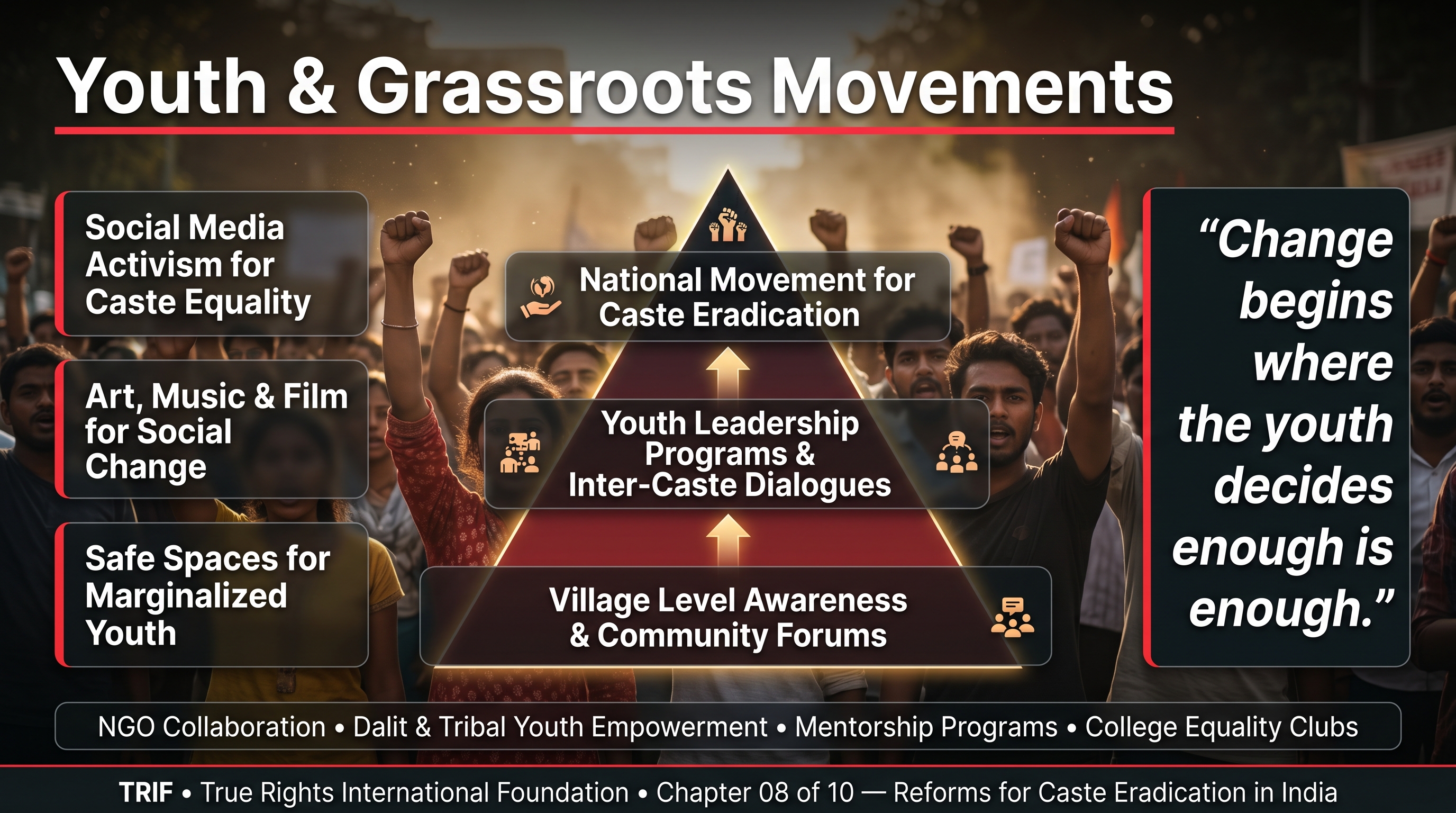
Social Media Activism: Mobilize youth through social media platforms to raise awareness about caste discrimination, challenge stereotypes, and promote inclusivity.
College and University Movements: Organize student-led initiatives including equality clubs, seminars, debates, and workshops that focus on the importance of eradicating caste discrimination.
Art and Music for Change: Encourage young artists, musicians, and filmmakers to produce content that challenges caste norms and promotes equality.

Leadership Training for Marginalized Youth: Establish leadership development programs for youth from marginalized communities, focusing on public speaking, advocacy, and community organizing.
Fostering Young Changemakers: Encourage young leaders from all caste backgrounds to come together and develop action plans for promoting equality.
Youth Mentorship Programs: Connect young activists with mentors who have experience in social justice and anti-caste movements.
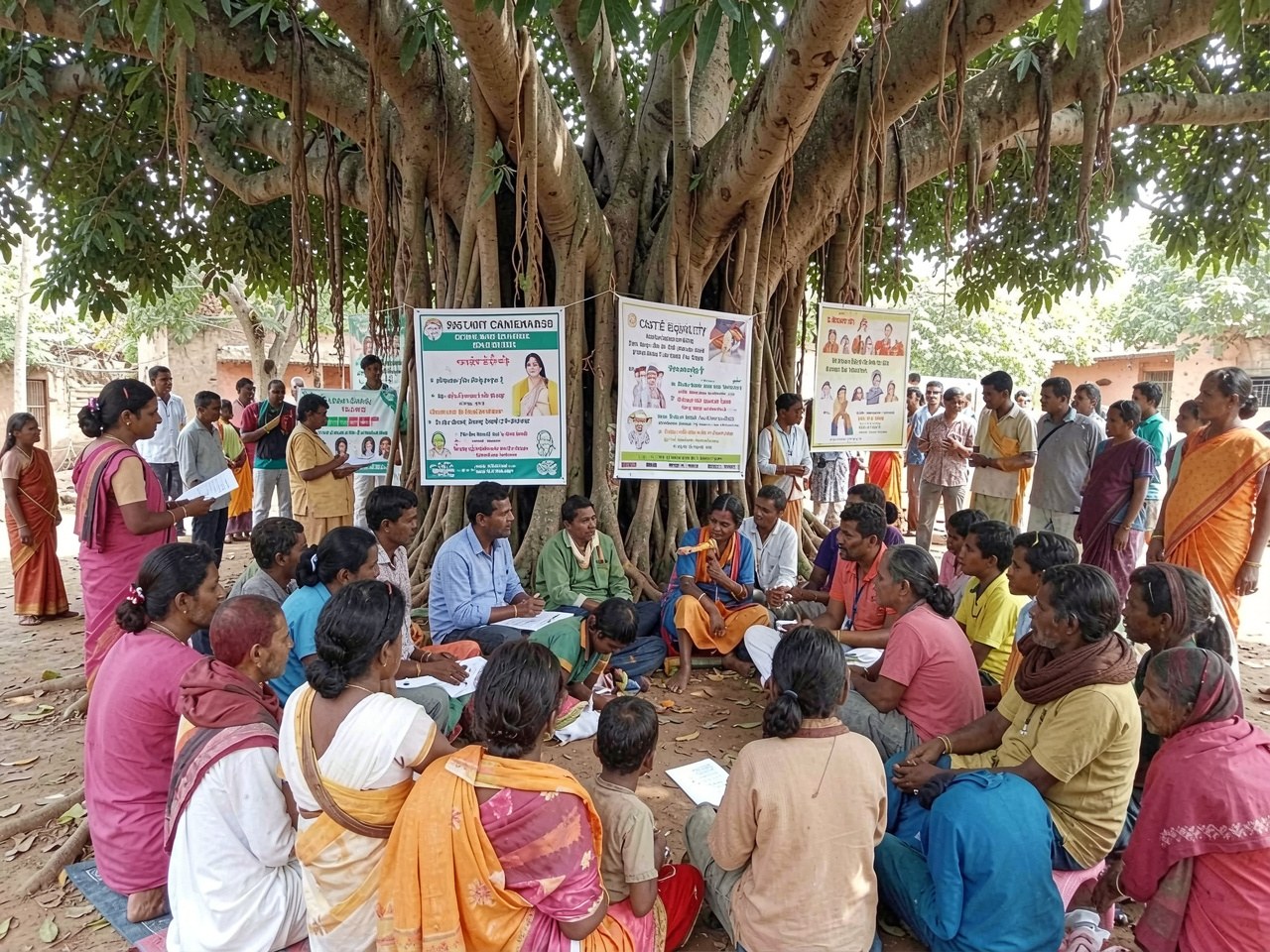
Village-Level Awareness Programs: Grassroots movements should begin at the village level, where caste discrimination is often most entrenched. Organize awareness programs and dialogues in rural areas.
Community Forums: Create local forums for open discussion on caste issues, providing a safe space for marginalized individuals to voice their concerns and experiences.
Role of Local Activists: Empower local activists and community leaders to take charge of organizing grassroots movements.
Inter-Caste Youth Dialogues: Organize dialogues and collaborative projects between youth from different caste backgrounds to foster understanding, empathy, and mutual respect.
Promotion of Inter-Caste Events: Encourage youth to organize inter-caste cultural and social events such as sports tournaments, festivals, and art exhibitions.
Youth Volunteering for NGOs: Encourage youth to volunteer for NGOs working on caste equality and social justice.
Partnerships for Change: Collaborate with civil society organizations to create larger, coordinated movements that can influence policy and public attitudes towards caste.
Youth-Led Protests Against Discrimination: Organize peaceful protests and rallies to draw attention to incidents of caste-based violence, discrimination, and injustice.
Lobbying for Policy Change: Train youth activists in advocacy skills to lobby for stronger anti-discrimination policies at the local, state, and national levels.
Empowering Dalit and Tribal Youth: Focus specifically on engaging Dalit, Tribal, and other marginalized caste youth in leadership roles within grassroots movements. Their voices and perspectives are critical for driving meaningful change.
Safe Spaces for Marginalized Youth: Create safe spaces where youth from marginalized communities can discuss their experiences, receive emotional support, and organize for their rights.
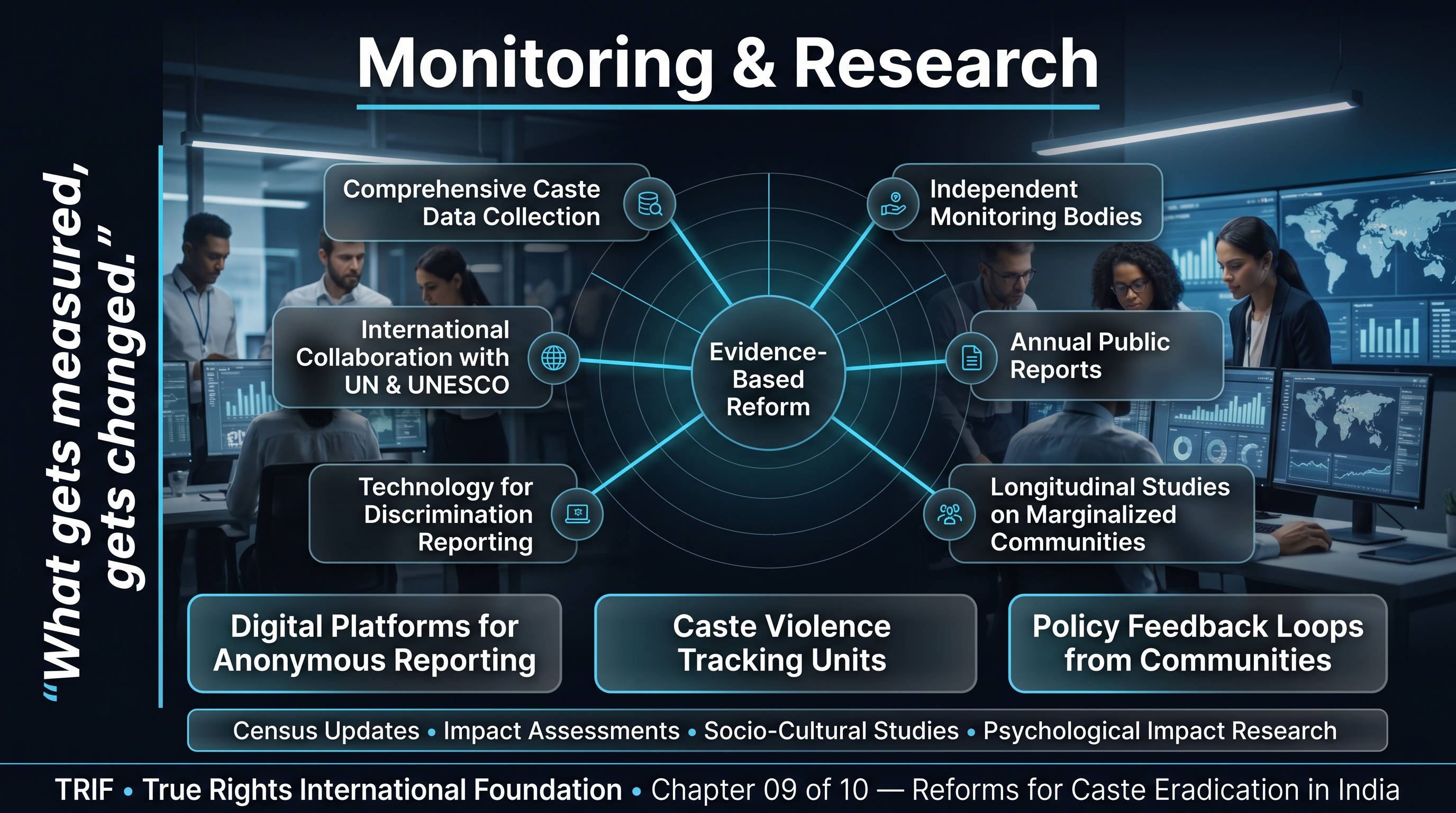
Comprehensive Caste Data: Regularly collect data on caste-based disparities in education, employment, healthcare, and social mobility. Government agencies, academic institutions, and NGOs should collaborate to gather this data.
Census Updates: Ensure that the national census includes accurate information on caste demographics and socio-economic conditions.
Longitudinal Studies: Conduct long-term studies that track the progress of marginalized castes over time in areas like income levels, education, and health outcomes.
Establishment of Monitoring Agencies: Create independent bodies at both national and state levels tasked with monitoring caste-based discrimination across sectors.
Regular Reporting: These monitoring bodies should publish annual or bi-annual reports detailing instances of caste discrimination, policy implementation gaps, and progress in reducing caste-based inequalities.
Monitoring Caste-Based Violence: Develop a system to track and respond to incidents of caste-based violence, with dedicated units within law enforcement.
Impact Assessments of Reservation Policies: Regularly evaluate the effectiveness of caste-based reservation policies in education and employment.
Policy Feedback Loops: Create mechanisms for communities and organizations to provide feedback on existing government initiatives.

Gaps in Legal Enforcement: Monitor the implementation of anti-discrimination laws such as the SC/ST Prevention of Atrocities Act to identify enforcement gaps.
Socio-Cultural Studies: Support research exploring the cultural and social dynamics of caste discrimination in different parts of India.
Psychological Impact Studies: Conduct studies on the psychological and emotional effects of caste-based discrimination on marginalized communities.
Caste in Modern Institutions: Analyze how caste dynamics persist in modern institutions like universities, corporations, and urban settings.
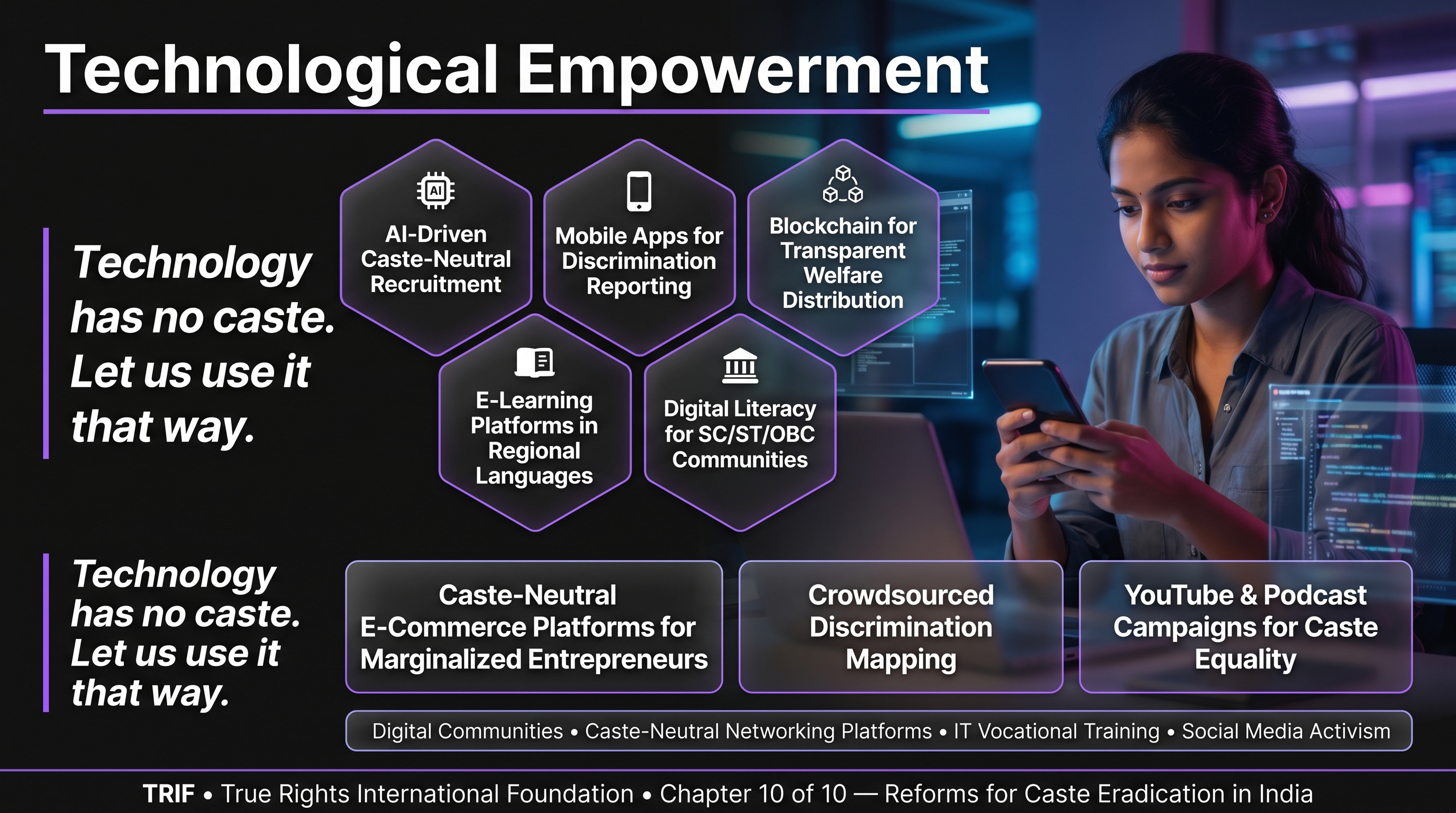
Digital Platforms for Reporting Discrimination: Create mobile apps and online platforms where individuals can anonymously report cases of caste-based discrimination.
Data Transparency: Make data on caste discrimination publicly available to increase transparency and accountability.
National Social Attitude Surveys: Conduct surveys that measure changing attitudes toward caste among different social groups, particularly urban and rural populations, youth, and elites.
Impact of Awareness Campaigns: Evaluate the impact of media campaigns, school programs, and grassroots initiatives on reducing caste prejudice.
Learning from Global Examples: Study how other countries have successfully addressed similar issues of social stratification and discrimination.
Collaboration with International Organizations: Work with the UN, UNESCO, and the ILO to conduct research and share global best practices on caste eradication.
Online Campaigns for Caste Equality: Use social media platforms such as Twitter, Instagram, and Facebook to raise awareness about caste discrimination and promote equality.
E-Learning Platforms: Develop e-learning courses and digital content that educate people about the history of the caste system, its harmful effects, and the importance of equality — accessible in regional languages.
YouTube Channels and Podcasts: Leverage YouTube, podcasts, and other digital media to promote discussions on caste issues and foster dialogue on caste reform.
Anti-Discrimination Reporting Apps: Create mobile applications allowing individuals to anonymously report incidents of caste-based discrimination, violence, or harassment, connecting victims with legal aid and government authorities.
Helplines and Support Networks: Set up digital helplines where victims of caste discrimination can seek legal assistance, counseling, or support through a simple mobile interface.
Crowdsourced Data Collection: Develop platforms allowing users to report caste-based incidents and create visual maps showing areas with high discrimination rates.
Caste-Neutral Networking Platforms: Develop social networking platforms and forums where individuals can interact and collaborate without revealing their caste identities, focusing on merit, skill, and collaboration.
Digital Communities for Social Change: Foster digital communities where people can discuss caste reforms, share success stories of equality, and organize events.
Transparent Resource Distribution: Use blockchain technology to ensure that government schemes, scholarships, and other benefits reach marginalized communities without caste-based corruption or favoritism.
Digital Identity Verification: Use blockchain to create a caste-neutral digital identity system that focuses on an individual's qualifications and achievements rather than caste background.
Access to Technology: Provide SC, ST, and OBC communities with greater access to technology through government and NGO initiatives, including affordable laptops, mobile phones, and internet access.
Digital Literacy Programs: Conduct digital literacy programs teaching marginalized individuals how to use the internet, social media, and mobile apps for education, employment, and entrepreneurship.
Vocational Training for IT Jobs: Develop vocational training programs in IT and digital skills for marginalized communities, providing tools to enter the growing tech industry.
Caste-Neutral Job Platforms: Create and promote online job portals where candidates are evaluated based on their skills, experience, and qualifications rather than caste background.
AI-Driven Recruitment Tools: Use artificial intelligence (AI) to remove biases in hiring practices, ensuring candidates are selected based on their abilities and potential rather than caste.
Digital Governance for Anti-Caste Policies: Leverage e-governance platforms to monitor the implementation of caste-based anti-discrimination laws and track government initiatives designed to uplift marginalized communities.
Public Grievance Platforms: Develop online portals where citizens can lodge complaints related to caste-based discrimination, ensuring swift government action and public accountability.
Support for Anti-Caste Movements: Use crowdfunding platforms to raise funds for grassroots movements, NGOs, and social campaigns working towards eradicating caste discrimination.
Financial Aid for Marginalized Communities: Crowdfund scholarships, financial aid, and other resources to support the education and entrepreneurship of individuals from marginalized communities.
Data-Driven Policy Planning: Use AI and data analytics to analyze trends in caste-based discrimination and socio-economic inequalities to create targeted policies.
Predictive Analytics for Intervention: Implement predictive analytics to identify regions or sectors where caste-based discrimination is most likely to occur, enabling proactive intervention.
Caste-Neutral E-Commerce Platforms: Promote caste-neutral e-commerce platforms offering equal opportunities for entrepreneurs from marginalized communities to sell their products online.
Digital Financial Services: Use digital financial services like mobile banking and microloans to offer financial inclusion to marginalized communities, breaking the cycle of caste-based economic dependency.
Eradicating the caste system in India requires a multi-pronged approach encompassing legal enforcement, educational reform, cultural change, economic empowerment, religious reform, political accountability, urbanization, youth engagement, robust monitoring, and technological innovation. These reforms, implemented together and sustained over time, can build a society where every individual — regardless of caste — enjoys equal rights, dignity, and opportunity.